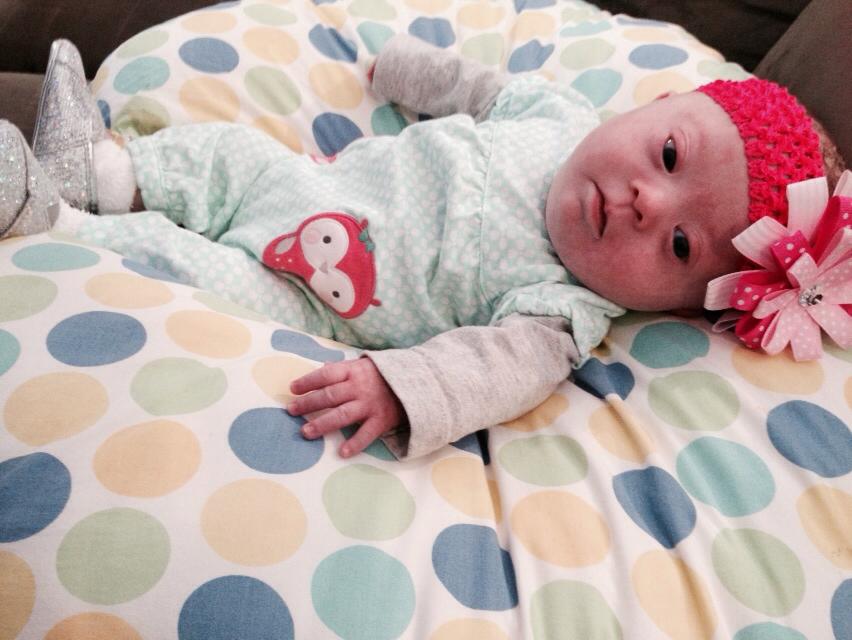
October is always my favorite month for many reasons…cooler weather, pumpkins, beautiful fall colors, my wedding anniversary, Vols football, bonfires, hoodies, and Halloween, my favorite holiday. It’s also a time when we honor some of my favorite people…October is Down Syndrome Awareness month. And as you can see, my buddies ROCK that extra chromosome!
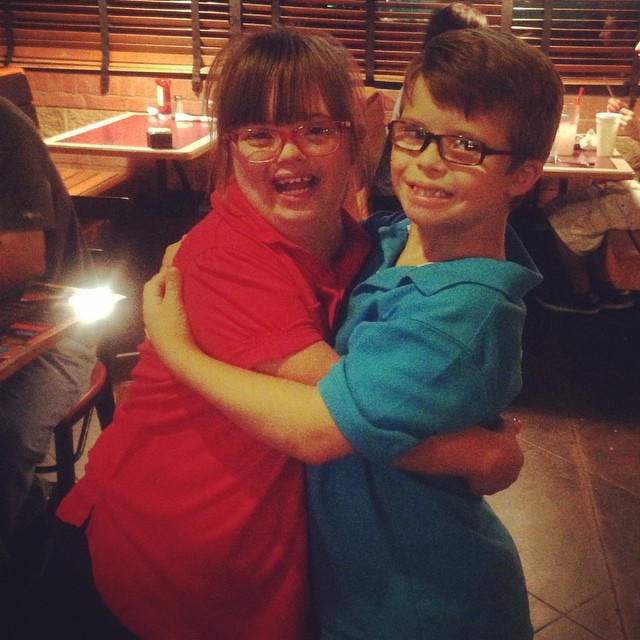 My friends Lily Heinrich and Ben Taylor showing some buddy love!
When I was a little girl, I had a great uncle named Fred. Although I didn’t get to see him very often, him living in Arkansas and me in Tennessee, I loved Fred to pieces. Fred listened when I talked. He never said a word. Just sat there in his rocking chair and listened to my childish chatter like it was the most important conversation he had ever heard. When all the other adults were busy having grown up discussions I didn’t understand, Fred silently listened to my wild stories, punctuating them with an occasional nod, whistle, or snap of his fingers. When my baby sister was born, my mother would put her in Fred’s stocky lap and he would wrap his short little arms around her and rock, stubby fingers gently patting her to sleep while he locked his almond-shaped eyes on me and waited for another story. I once asked my grandmother, Fred’s sister, why Fred was so different from all the other grown ups. She just laughed and said, “Honey, Fred’s just a big child himself.” I know now what I didn’t know then, what they didn’t know then, what my grandmother and her remaining sister are still not sure of today. Fred had Down Syndrome.

Wes Maupin, son of my co-worker, Laura Maupin…wrangler of stick horses and eater of chocolate!!
Back in the 1922, when Fred was born, there were no prenatal screenings or genetic tests to determine if a child would be born with disabilities. There were no labels for specific types of disabilities, and people surely didn’t understand what caused them. No one understood, either, that certain genetic anomalies might affect organs other than just the brain itself, such as the heart, lungs, or kidneys, which in itself could cause premature death. Babies were born under the pretense they would be “normal,” and if they weren’t, it was just “the will of God.” My grandmother remembers that Fred was born at home, but arrived before the doctor could get there. He almost died, and my great-grandmother suspected he may have had some brain damage even then. Then, when he was around 4, he had another serious illness, possibly polio, after which his intellectual disability was more pronounced. Remembering Fred’s features as an adult leads me to believe that even as a child, Fred had certain physical markers that we today associate with Down Syndrome, such as the short limbs, stocky stature, and the almond-shaped eyes. But to my great-grandparents in the 1920s, that didn’t mean anything…that was just what Fred looked like. I suspect, also, that Fred’s close brush with death at birth was probably not because the doctor arrived too late to deliver him properly, but because of some other health impairments caused by the presence of that third chromosome on the 21st pair.
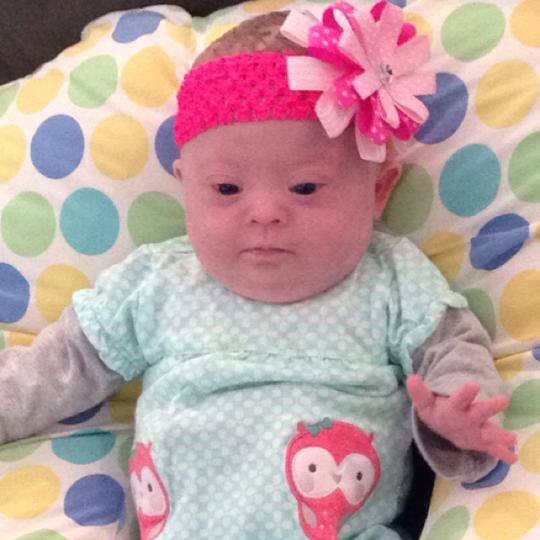
My precious Joanna Smith…daughter of Ashley Smith and granddaughter of my dear friend, Ann Smith.
Fred’s disability certainly didn’t matter to his family. In a world where children went to work early on the family farm and contributed to the welfare of the family, children with disabilities were often deemed burdens and put in institutions where the family could avoid the social stigma of having a disabled child. Not Fred, though. He was one of the lucky ones. My grandmother remembers when Fred turned six and my great-grandparents sent him to school along with the other children. It wasn’t long before the school sent him home and told them it was best for Fred not to come back. Back in those days, there was no place for intellectually disabled children in school. The accepted notion of the day was that “those kids” couldn’t learn anything and it was best not to try to teach them. And that was that. Fred stayed at home and worked on the family farm, and my great-grandmother taught him everything she could. Fred lived with her until her death in the 1970s, and then he lived in an assisted living facility in his hometown where his brothers and sisters would come see him almost every day and take him home to spend time with his family, and with me, when I got to visit. Lucky, lucky me.

Ethan Pyburn, son of one of my co-workers, Denise Pyburn
We have come light years in our knowledge of intellectual disabilities and in our acceptance of them. We know today that no such limits exist in the amounts people with intellectual disabilities can learn and grow and contribute to our society. But we still have many miles to go. Case in point…
My summer work consists largely of creating a schedule for the coming year and placing children in classes. Because I think children learn best when they are exposed to a large variety of different learning styles and abilities throughout the day, I don’t like for my students to travel through their schedule in class groups. So, when it’s possible, I try to create individualized schedules, sort of like a high school schedule, where kids are in different classes with different people all day instead of making the homeroom circuit through the classes. Because we are a small school, however, with a finite number of teachers dedicated to inclusion, my students with disabilities often take math and reading classes together so that I can make sure they have all the staff support they need to be successful. I also try to make sure that in every single class, I have a heterogeneously mixed group of children with academic abilities at all points along the spectrum. Research tells us that kids learn best this way, and I completely agree. So one recent summer, about three weeks before school started, I sent a very tentative homeroom list out to each of my teachers with a request for them to contact each child on their list and welcome them to their class. I made sure to stress that these class lists were not yet finalized; however, I failed to ask the teachers not to share these with parents just yet. And of course, that happened. So I got a phone call a few days later from a parent asking me if it would be possible to change her daughter’s homeroom placement. I thought that was a rather odd request…I normally do not ever have homeroom requests from parents because of the way our schedule runs. Her reasoning was that her oldest son had a particular teacher for homeroom when he was in 8th grade and they just thought so much of her, they wanted their daughter to have her for homeroom, too. I explained to her that it really didn’t matter who she had for homeroom because she would spend an equal amount of time with each teacher during the day. I also explained that the class groups had not yet been checked for gender and minority balance and that it was very likely the groups would change. She asked that her child be considered if any changes were made. I agreed to consider it if the situation arose. And, as luck would have it, I did have to make some changes, because I didn’t feel that the classes were balanced academically. And being at the top of her peers academically, her daughter was one that needed to be shifted to another class group in order to make sure we had a heterogeneous mix of students in each class. Big. Mistake. Unbeknownst to me, First Mama had shared the tentative class schedule with another mama, whose daughter, it turns out, was also one that was shifted to a different class. And after registration day, when the final schedule wasn’t the one Other Mother had originally seen, I got a visit. And Mama wasn’t happy.
She was insulted, you hear me? Insulted that I had moved her daughter into a class with “those kids.” Insulted that I thought so little of her daughter’s stellar academic skills that I would put her into an inclusion class for “those kids.” And then she dropped the big bomb on me. She claimed that another parent, whom she would leave unnamed, had come up here prior to registration day and complained about her daughter being in “that class” with “those kids” and that I had moved that daughter out. I was confused…and then I realized that she was talking about First Mama who wanted her child in a particular class in order to carry on the family tradition. And it began to dawn on me that I had been tricked. Other Mother went on to tell me that the real reason First Mama made the request was not because they just loved this teacher so much, but was because she didn’t want her daughter in the same class as “those kids.” My hackles began to rise, and I asked, “What kids?” And she said, “You know, those kids. The slow class. The Special Ed kids.”
And then I got insulted, you hear me?!
And I unleashed. I proceeded to tell her that her daughter, or ANYBODY’s daughter, was not too smart, too gifted, or too good to learn from the differences and the struggles of “those kids”. I told her that at this school, we didn’t have slow classes and that every child, including “those kids”, were held to the very highest academic expectations and I could always count on “those kids” to meet them, unlike those that thought they already knew it all. I told her that there but for the grace of God Almighty goes she…that one fall, one car accident, one unfortunate bump on the head could result in her daughter becoming one of “those kids.” I told her that it seemed she and her daughter may have been lacking those qualities that I and every other employer in the world were looking for in productive members of society…the qualities of tolerance, acceptance, kindness, empathy, respect and joy possessed and demonstrated every single minute by “those kids.” And I told her that I wondered if she thought that her daughter was going to grow up, live, and work in a protective bubble where she wouldn’t have to deal with people who were different like “those kids”. I told her. Oh, I told her. And after she left my office dragging her tail between her legs, I called First Mama and told her, too.
I want to apologize to my director for speaking to parents like that and for throwing such a fit. My behavior was completely unprofessional and I’m sure I’ve alienated at least those two parents. Somehow, though, I think she would have done the same thing, albeit with a little more tact than with which I handled the situation. Because you see, she’s like me…she will NOT apologize for the passion she has to see that every child in this system excel to the best of their abilities, to squeeze out every once of potential found in every student, and to make their lives better! Until every single person alive believes in the possibilities that lie in every child and refuses to put limits on children, disability or no, then we have much work to do.
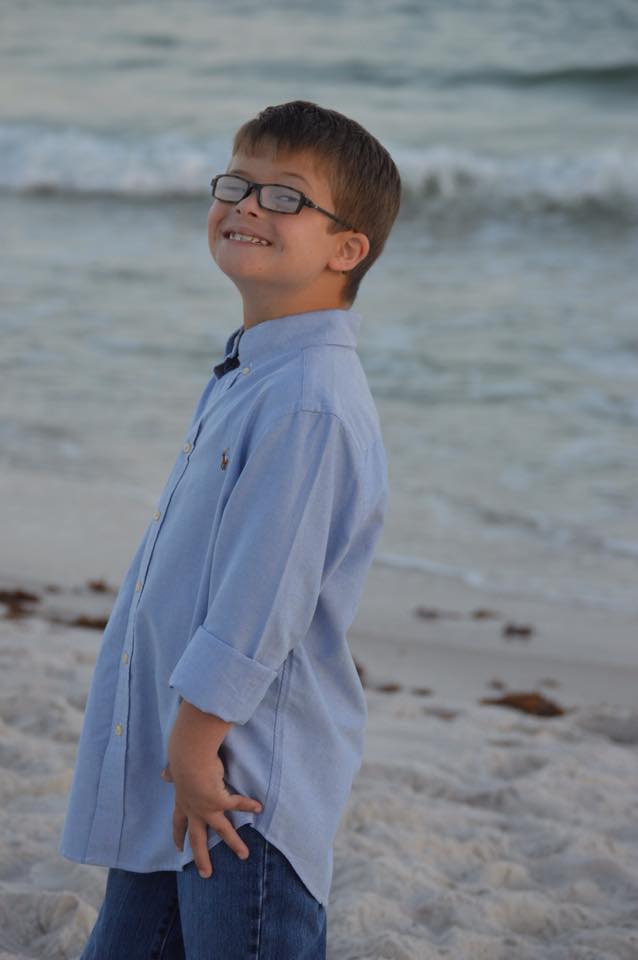
Ben Taylor, son of my friends Shannon and Rick Taylor.
So I celebrate October, not only for children with Down Syndrome, but for all children and adults who are perfectly imperfect. I celebrate those with learning disabilities, with intellectual disabilities, with physical disabilities, because who among is is NOT disabled in some way? Who among us does NOT struggle with one limitation or another each and every day? Perhaps, though, the most important question should be, who among us doesn’t have something to learn from those who meet those struggles head on, with gusto and determination, and who celebrate each tiny victory with excitement and rejoicing?
 Lily celebrates her win during last spring’s Special Olympics. (Photo credits to Kenneth Cummings and The Jackson Sun.)
Lucky, lucky me. I got to love Fred. And I get to love Ben, Wes, Ethan, Joanna, and Lily! How great is that?! You hear me?!
 Principalities